Degrees of Separation: Inside Britain’s Thermostat Cold War
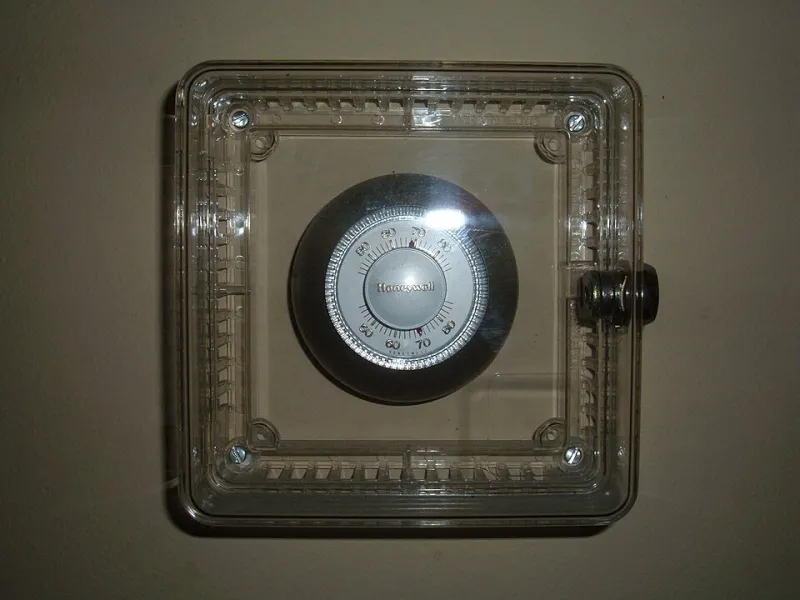
Photo: BrokenSphere, CC BY-SA 3.0, via Wikimedia Commons
The British thermostat is not a device for controlling temperature. It is a device for controlling conversation. Or, more accurately, for avoiding it. In 2026, with energy bills still a reliable way to liven up a dinner party and smart meters glowing in the hallway, the thermostat has become a small monument to domestic diplomacy.
It sits on the wall like a referee. It has numbers. It has a schedule. It has opinions, apparently, about when the house should be warm. And around it, every winter, a silent negotiation takes place.
The setting
There is always a setting. It might be 20°C, which is comfortable but expensive. It might be 18°C, which is sensible but requires a jumper. It might be 19°C, which is the compromise setting, and therefore the most politically unstable.
The setting is rarely discussed openly. Instead, it is adjusted. A half-degree here. A timer change there. The heating comes on at 6.30am, then 6am, then 5.45am, and no one admits to anything. The thermostat has a memory. The household does not.
The silent adjusters
One person in every household is a secret thermostat operative. They do not announce their actions. They do not seek credit. They simply wait until the kitchen is empty, walk over to the wall and nudge the dial up by half a degree. Then they leave the room with the quiet satisfaction of someone who has just solved a problem no one else noticed.
When challenged, they deny it. 'I haven't touched it.' The dial has moved. The room is warmer. The evidence is circumstantial. The trial is adjourned.
Then there is the person who turns it down. They are the thermostat’s conscience. They believe in layers, in hot water bottles, in the moral superiority of a well-insulated jumper. They will turn the heating off at 10pm and open a window at 7am to 'let the air through'. They are not cold. They are principled.
The bill announcer
Every household also has a bill announcer. This person does not adjust the thermostat. They simply announce the consequences. 'Have you seen the direct debit?' they say, in a voice that is meant to be neutral but is not. 'It's gone up again.'
The bill announcer never says 'turn it down'. That would be confrontational. Instead, they say things like 'It's mild for November, isn't it?' or 'I suppose we could just wear another layer.' These are not suggestions. They are diplomatic notes.
The silent adjuster hears them and does nothing. The thermostat stays where it is. The bill announcer sighs. The cycle continues.
The fourth jumper
The British solution to thermostat conflict is not negotiation. It is clothing. Why have the conversation when you can put on a fourth jumper? Why discuss the heating schedule when you can buy a blanket with sleeves?
The fourth jumper is a symbol of national resilience. It says: I am cold, but I am not going to make it your problem. It also says: I am judging you, slightly, for having the heating on in the first place. The fourth jumper is passive aggression in knitwear.
There is also the hot water bottle, the electric blanket, the fingerless gloves worn indoors and the small ceramic heater that is brought out in December and put away in February. These are not solutions. They are coping strategies.
A truce?
Smart thermostats were supposed to solve all this. They have schedules, apps, geofencing and detailed reports. They can tell you exactly how much energy you used and when. They have, in some households, simply moved the argument to a new platform.
Now the dispute is about who has access to the app. Who changed the schedule. Why the heating came on at 3pm when no one was home. The thermostat is smarter. The diplomacy is not.
The thermostat war is rarely won. It is managed. A compromise is reached, usually without words. The heating goes on a little earlier. The jumper stays on a little longer. The bill announcer says nothing for a week. The silent adjuster smiles, briefly, and turns the dial up by half a degree.
And somewhere in the hallway, the smart meter glows. It knows. It always knows.