The Invisible Tab: How the British Pub Round Really Works in 2026
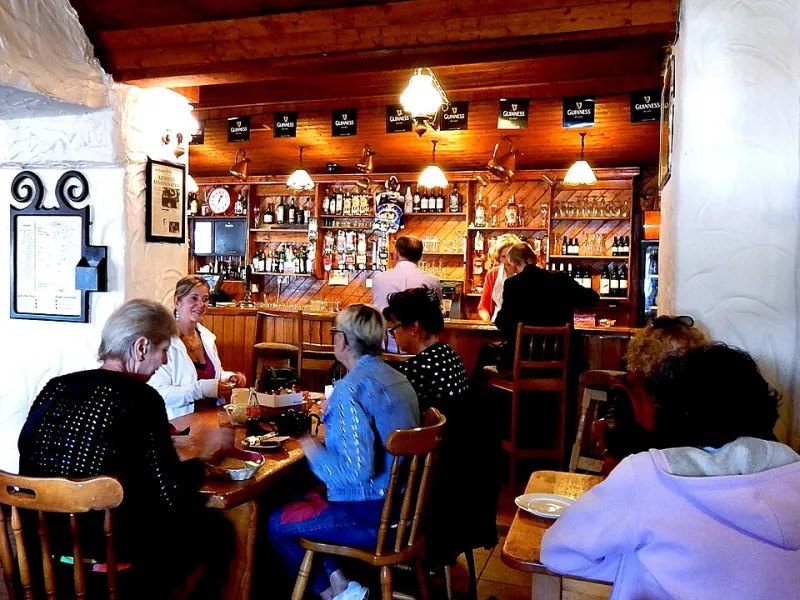
Photo: Suzanne Mischyshyn , CC BY-SA 2.0, via Wikimedia Commons
Nobody signs anything. There is no bouncer enforcing it and no clause in the Licensing Act that says you must buy your friend a pint. Yet the round is one of the most powerful social contracts in Britain. You arrive at the pub as individuals; you leave as a small, mildly indebted collective.
In 2026, that contract has become more complicated. A pint in many parts of the UK now costs enough to make you check the price board twice, and card-only pubs have turned the old cash ritual into a series of contactless taps. The result is a social minefield that is still navigated with nods, half-sentences and the occasional strategic trip to the toilet.
A contract written in lager
The basic rule is simple: one person buys a drink for everyone in the group, and then someone else does the same. The round rolls on until people leave, switch to soft drinks, or quietly disappear. In theory it is generous. In practice it is a tiny credit system, held together by memory and good manners.
Most groups do not keep a spreadsheet. They keep a feeling. You know if you are one behind. You know if the friend who bought the first round has been nursing a half for forty minutes while everyone else has moved on to something hoppy and expensive. The round is not about exact change; it is about being seen to take your turn.
Who buys first?
Tradition says the person who suggests the first drink buys it. If you say ‘Shall we get a pint?’, you have effectively volunteered. There are exceptions: it is your birthday, you have just been promoted, or you are visiting from out of town and being treated. But the safest assumption is that the first person to move towards the bar is the first person to reach for their card.
Then comes the polite standoff. Someone says ‘I’ll get these’ and someone else says ‘No, let me.’ This is not always a genuine offer. It is a ritual. The correct response is to protest once, then accept gracefully. Do not protest three times unless you actually want to buy. Do not accept too quickly unless you are comfortable being known as the person who never reaches for their wallet.
The fine art of opting out
Not everyone wants to join a round, and that is allowed. The trick is to say so before the first drinks arrive. ‘I’m on my own tonight’ is clear and blameless. ‘I’m trying to take it easy’ works. ‘I’ll get my own, thanks’ is perfectly acceptable if delivered with a smile.
What causes trouble is the half-in, half-out approach. You let someone buy you a pint, then announce that you are not doing rounds. That is not opting out; that is accepting a small loan and then changing the terms. In a card-only pub, where everyone taps separately, it is tempting to drift into a pay-as-you-go model without saying so. But the group will notice. The round has a long memory.
When the chain breaks
Every pub group has a story about the one who vanished. They went to the loo and never came back. They left ‘to get some air’ and were seen ten minutes later buying a kebab. Or they bought a round of crisps and considered the debt settled.
Breaking the chain is rarely confronted directly. Britain runs on passive aggression, not tribunal hearings. The offender is not accused; they are discussed in the car home. They become ‘a bit flaky’ or ‘not really a round person’. The punishment is social, not financial. They may find themselves included in fewer pub trips, or placed at the end of the table where the drinks order is easier to forget.
The 2026 twist: card-only pubs and expensive pints
Two things have changed the round recently. The first is price. When a pint costs less than a fiver, buying a round feels like a modest gesture. When it costs closer to a tenner in some city pubs, it feels like a decision. Groups are more likely to order halves, switch to soft drinks, or agree to split the bill. The round survives, but it has become more self-aware.
The second is payment. Card-only pubs remove the satisfying thump of notes on the bar. Instead, the bartender asks ‘Together or separate?’ and the whole table is suddenly on trial. Answer ‘together’ and you are the round buyer. Answer ‘separate’ and you have announced that this is not a round. The question is not really about payment; it is about belonging.
Quiz: what kind of round-buyer are you?
Answer honestly. There are no prizes, only self-knowledge.
-
The bartender asks for the order. You are: A) already reaching for your card. B) waiting to see if someone else moves. C) working out what everyone owes. D) suddenly very interested in the beer menu.
-
Someone buys you a drink. You: A) thank them and make a mental note. B) say ‘next one’s mine’ before the glass lands. C) calculate the exact value. D) thank them warmly and hope they forget.
-
You see the price of a pint. You: A) order anyway. B) wince internally. C) suggest a cheaper pub. D) order a half and call it a lifestyle choice.
-
The pub is card-only. You: A) tap for the whole round. B) ask for separate bills. C) send the exact amount by bank transfer. D) pretend the card machine has failed.
-
There are eight of you. You: A) buy first. B) wait for a natural gap. C) suggest splitting into two rounds. D) go to the bar alone.
-
A friend leaves before their turn. You: A) say nothing. B) tease them gently. C) remember. D) consider doing the same.
Mostly A: The Anchor. You are reliable, generous and quietly resentful. You buy first, you buy often, and you keep a mental ledger you will never mention. Mostly B: The Diplomat. You read the room, time your move and make everyone feel included. Mostly C: The Auditor. You are fair, precise and in danger of making the pub feel like a finance meeting. Mostly D: The Ghost. You are charming, elusive and always ‘just nipping out’. Mixed: The Social Chameleon. You adapt to the group, which is either diplomatic or a sign that you need to buy a round soon.
The round is not really about money
The round endures because it is not just a payment system. It is a way of saying: I am here, I see you, I am part of this. It is a small, repeated act of trust. In 2026, with pints costing more and cards doing the talking, that act takes a little more thought. But the principle is the same. Buy your round. Be clear if you are not joining. And never, ever disappear to the loo just as the glasses empty.