The Sorry Reflex: Why We Apologise to Tables, Teapots and Other Inanimate Things

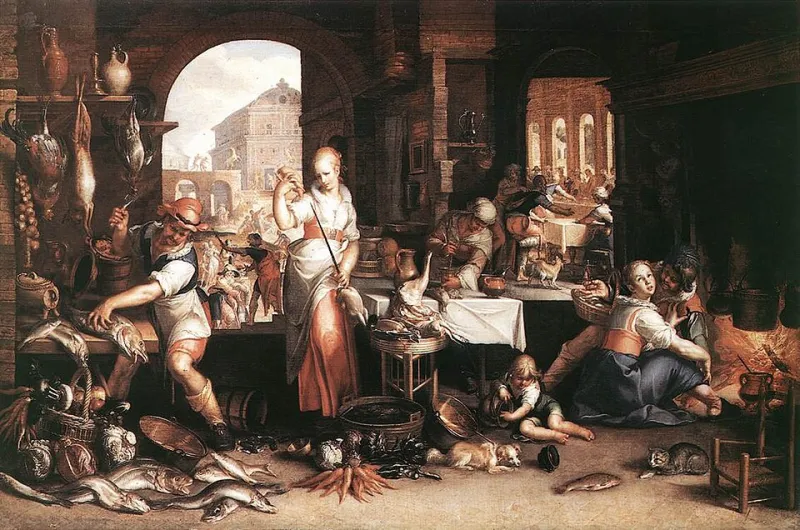
Photo: Tom Carper, Public domain, via Wikimedia Commons
Picture the scene. You are crossing a room, slightly too fast, and your hip catches the corner of a dining table. There is a dull thud. And before your brain has caught up, you hear yourself say it: 'Sorry.' Not to a person. To the table. The table, which has no feelings, no grievance and no solicitor. The table, which frankly started it by being exactly where it always is.
If that sounds familiar, you are in good company. Ask around any British office, kitchen or family home and you will find people who apologise to doors, spoons, printers, parked cars and at least one memorable hoover. The habit is so ordinary that we barely notice it — until someone points it out and everyone in the room says, 'Oh yes, I do that.'
So why do we do it? And is it harmless charm, or a sign that our social wiring is permanently set to 'over-polite'?
A nation of reflex apologisers
The British relationship with 'sorry' is famously tangled. We use it to mean 'I was wrong', but also 'excuse me', 'I did not hear you', 'please move', 'I am about to inconvenience you slightly' and 'I acknowledge that the weather is bad and we are both enduring it'. It is less a word than a multi-tool.
That versatility helps explain why it slips out around objects. When you bump a table, your brain reaches for the nearest social script. The script says: minor collision, possible fault, deploy apology. It does not always stop to check whether the other party has a pulse.
In an entirely unscientific poll of friends and colleagues, the confessions came thick and fast. One reader says she apologises to her car when it fails to start. Another mutters 'sorry' to a dropped fork as if she has personally let it down. A third once said 'sorry' to a self-service checkout, which is perhaps the most British sentence ever constructed.
What the psychologists say
There is a reasonable explanation, and it is not simply that we have all lost the plot. Psychologists talk about anthropomorphism — our tendency to give human qualities to non-human things. We name cars, scold laptops and feel vaguely guilty about throwing away a childhood teddy. Once an object has been pulled into our social world, apologising to it is not much of a leap.
There is also the matter of social scripts. Apologising is a deeply ingrained politeness move, especially in cultures that place a high value on not causing friction. When something goes bump, the reflex fires before conscious thought. It is the conversational equivalent of a knee-jerk reaction — except the knee is saying 'sorry' and the jerk is a door handle.
Some researchers have suggested that talking to objects can help us regulate emotions. A muttered apology after a clumsy moment may be a tiny release valve: a way of acknowledging the awkwardness without making a big deal of it. It is not really about the table. It is about us, and the small social discomfort of having been clumsy in a room where someone might have noticed.
The etiquette of furniture
Historically, British etiquette has been less about feelings and more about form. The Victorian obsession with propriety gave us elaborate rules for calling cards and dinner seating, not guidance on whether to say sorry to a sideboard. But the underlying principle — avoid causing offence, smooth the social surface — has not gone away. It has simply found new outlets.
In that sense, apologising to a chair is a kind of etiquette overspill. We have practised being polite to people so thoroughly that the habit leaks on to the furniture. The chair did not need an apology. But the part of us that wants to be seen as courteous did not want to risk leaving a social debt unpaid, even to an object with four legs and no memory.
There is also a superstitious edge to it. Some people apologise to objects because it feels unlucky not to. Others do it because they have grown up in households where bumping into things was met with a chorus of 'careful' and 'sorry' from every direction. The reflex is learned, not innate. It is passed down like a family recipe for over-politeness.
When it tips from charming to compulsive
For most people, the sorry-to-a-spoon habit is harmless. It is a verbal tic, a bit of social lubrication, a small piece of theatre that costs nothing. It may even make us nicer to be around: people who apologise to furniture tend to be people who notice when they have inconvenienced others.
But there is a point where the reflex becomes less charming. If you find yourself apologising to a printer for several minutes, or feeling genuine guilt towards a bin bag, it may be worth asking what the apology is doing. Is it a light-hearted habit, or is it a way of pre-emptively taking the blame for everything, including the behaviour of inanimate objects?
That distinction matters. There is a difference between saying 'sorry' to a chair because it is funny and saying 'sorry' to a chair because you feel responsible for the chair's feelings. The first is a quirk. The second is a sign that your politeness settings might need a gentle rebalance.
Should we stop?
Probably not. The sorry reflex is too deeply embedded to abolish, and it is not doing much harm. But it is worth noticing. The next time you apologise to a door for being in the way, or to a kettle for switching it on too aggressively, take a second to ask: who exactly am I apologising to?
The answer, of course, is nobody. And that is fine. We are not really talking to the door. We are talking to the room, to the day, to the small awkwardness of being a person in a world full of corners. The door just happens to be there.
So carry on saying sorry to the table. Just do not expect it to say sorry back. It is British, but it is not that British.