The Padlock Protocol: What Britain’s Sheds Say About Us
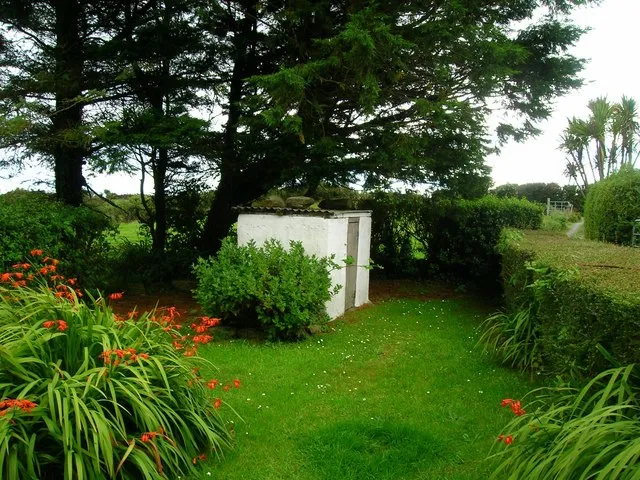
Photo: John Darch, CC BY-SA 2.0, via Wikimedia Commons
Every British shed contains three things: a lawnmower that has seen better days, a jar of screws that no longer match any known thread, and a private belief that this year the tomatoes will be different. The shed is not really a building. It is a mood with a roof.
We talk a lot about the British love of DIY, but the shed is where DIY stops being a hobby and becomes a personality. It is the last unregulated kingdom on the property: too small to be a room, too important to be a cupboard, too full of half-finished projects to be described as storage. And yet, for millions of people, it is the only place in the house where nobody asks what you are doing.
The shed tour: an invitation, not an entrance
The shed tour is one of Britain’s great social rituals, and it follows strict rules. It is offered, never requested. It usually happens after a cup of tea has been drunk and a second one has been politely declined. The host will say something self-deprecating – ‘It’s a bit of a mess in there’ – and then open the door with the air of a man revealing a modest but deeply personal art collection.
Inside, you will be shown the workbench. You will be shown the shelf of paint tins, some of which predate the euro. You will be shown the thing he is currently making, which may be a bird table, a jig, or a device for holding a drill at a very specific angle. You will not be shown the corner where the old carpet lives, or the drawer that contains every instruction manual for every appliance the household has ever owned. Those are private.
The tour is not really about the objects. It is about permission. The host is letting you see a version of him that the front room does not allow: the version that tinkers, hoards, plans and occasionally swears at a piece of sandpaper.
The unspoken no-entry rule
For all the openness of the shed tour, there is an equally firm rule in the other direction: you do not go in uninvited. Not to borrow a trowel. Not to shelter from the rain. Not even to return the hedge trimmer you borrowed in April and have been meaning to bring back ever since.
The shed door is a boundary. It is often literally a boundary – at the end of the garden, behind the bins, past the washing line – and it carries the same social weight as a closed study door or a locked diary. In a country where we apologise to furniture and thank bus drivers, the shed is one of the few places where we permit ourselves a small, unapologetic ‘no’. That is not unfriendliness. It is a rare and precious thing: a room of one’s own, with a padlock.
Hoarding as heritage
The contents of the average shed tell a story about British optimism. We keep things not because we need them, but because we might. The short length of pipe. The tin of screws. The broken strimmer that could be fixed with the right part, if the right part existed, which it might, in a box, somewhere.
This is not just mess. It is a quiet act of faith in the future. The shed is where we store our belief that we will one day have the time, the weather and the inclination to finish what we started. It is a museum of maybe, and unlike most museums, you are allowed to touch the exhibits – just not take them home.
A room of one’s own (with a hasp)
The shed also reveals something about privacy in Britain. We are a nation that likes to be close but not too close. We love a neighbour, but we also love a fence. The shed is the architectural expression of that compromise: a small, separate space at the bottom of the garden, close enough to be called if needed, far enough to pretend you cannot hear.
For many people, it is the only place where they can be alone without explanation. You do not have to be doing anything useful. You can sit on an upturned bucket and listen to the radio. You can stare at a half-built shelf. You can simply be. In a house full of other people’s needs, that is not nothing.
What the shed reveals
The shed is where Britain keeps its unfinished business: the projects, the plans, the parts that might come in handy. It is also where we keep a version of ourselves that is not on show in the kitchen. It is messy, hopeful, slightly damp, and entirely ours.
So if you are ever offered a shed tour, accept it. Admire the workbench. Nod at the paint tins. And when you leave, do not go back in without knocking. The padlock is not just there to keep the tools safe. It is there to keep the world out.