Kettle Logic: The Unspoken Rules of Britain’s Crisis Brew
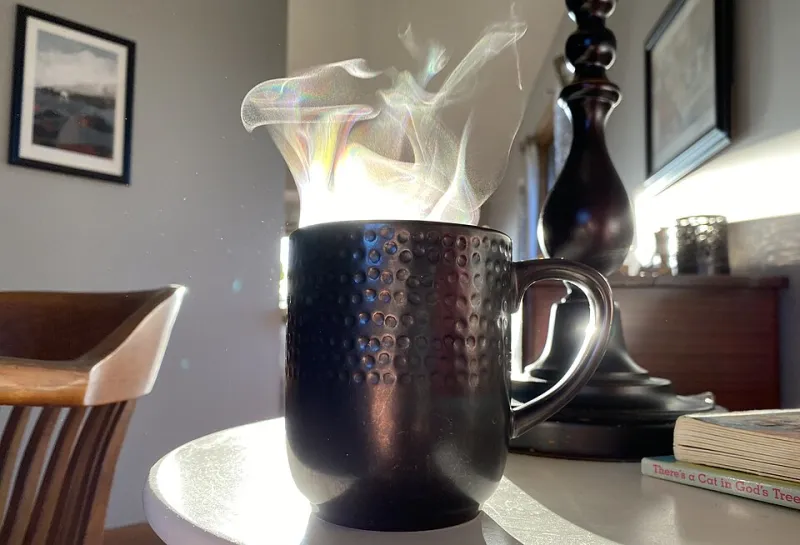
Photo: PedanticNarrativeController, CC0, via Wikimedia Commons
The kettle as first responder
There is a particular sound that follows bad news in Britain. It is not a sigh, or a sharp intake of breath, or the creak of a chair. It is the click of a kettle switch. In 2026, when a boiler has given up, a work email has landed badly, or a neighbour has made a pointed remark about hedge height, the first practical response is often not a plan. It is a brew.
The offer is rarely about thirst. It is a way of saying: I have registered your distress, and I am doing something about it. Unlike a hug or a speech, tea comes with a script. It gives both people something to do with their hands and a small, manageable task to focus on. The crisis cuppa is not a cure. It is a pause button with a handle.
The opening move
‘Put the kettle on’ is not usually a literal instruction. It is an invitation to sit down. The correct response is not an immediate ‘no thanks’. You must perform a small refusal first — ‘Oh, you don’t have to’ — and the host must then bat it away with ‘It’s no trouble’. This is not dishonesty. It is a social handshake.
Only after two rounds can a refusal be accepted without causing offence. Accepting first time can feel as if you are treating your host like a café. Refusing twice can feel like a rejection of their care. The middle ground is a delicate thing: a slight tilt of the head, a half-smile, and a sentence that begins with ‘Well, if you’re sure’.
The ‘you must let me’ standoff is the advanced version. This is where two people who both want to be the one making the tea politely wrestle for control of the kettle. It is rarely about tea. It is about who gets to be useful, and who has to sit down and be looked after.
Milk, sugar and the strong-brew test
The real test of a crisis brew is memory. A crisis is not the moment for experimental tea. Nobody wants a herbal infusion or a novelty blend when their boiler is leaking. They want the tea they always have, made the way they always have it. This is why the question ‘How do you take it?’ matters so much. It signals that you have been paying attention, even if you have never made them a drink before.
Milk in first or last is a class-coded rabbit hole best avoided in an emergency. The safer route is to ask, then follow instructions exactly. Sugar is a similarly loaded subject. Some people who have not taken sugar for years will accept half a teaspoon in a crisis, because the ritual demands a small concession. Others will refuse it on principle, then look slightly disappointed when you believe them.
Then there is the biscuit hierarchy. A Rich Tea is for formal visits and mild disappointments. A digestive is for solidarity. A Hobnob is for full emergency. A chocolate digestive is for bereavement, or for a boiler that has failed in December. The biscuit is a bracket, not the point. It gives the mug something to sit beside and the conversation something to circle around.
The second brew
The first mug is ceremonial. The second is confessional. This is when the story comes out properly — the thing that was really wrong, rather than the version that was offered at the door. The first brew buys time. The second brew uses it.
This is also where the refusal dance becomes useful again. If someone says ‘I’ll make it myself’ rather than ‘yes please’, they are often trying to reclaim a bit of control. Let them. The crisis brew works best when it is not forced. It is an offer, not a prescription.
Why a mug works better than a speech
A hot drink is a low-cost, repeatable gesture that does not require anyone to be articulate. In a culture that often prefers understatement, tea is a way of saying something without saying it. It says: I am here. I have not fixed it. But I have boiled the kettle.
In 2026, with energy bills and inboxes and all the small machinery of adult life, the ritual still holds. The kettle is not a solution. It is a way of making the room feel less alone. And sometimes that is the most practical thing on offer.